Jack Ruthven’s Identity Mystery
Young Captain Jack · The Son of a SoldierJack Ruthven’s Identity Mystery governs Jack’s emotional and narrative movement from apparently secure belonging to painful uncertainty, false recognition, and final restoration of his family identity. At first, the mystery is weaponized against him: Jack hears that he is “a nobody,” that he does not belong to the Ruthven family, and that he will someday have to leave. The subsequent investigation transforms that insult into a larger question about adoption, memory, parentage, and the power of material evidence.
The First Crisis: A Ruthven and a “Nobody”
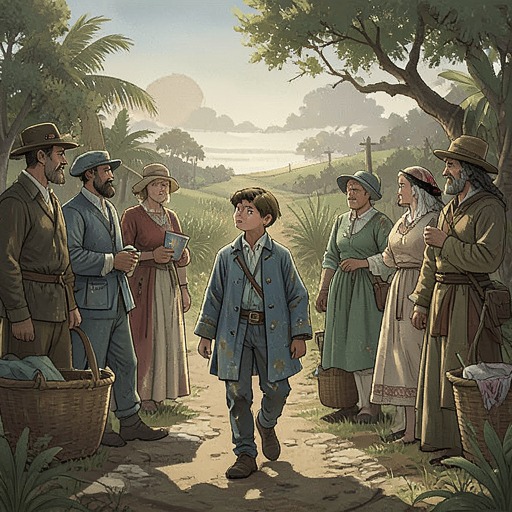
The mystery begins when Darcy Gilbert reports the accusation that Jack has no true place in the Ruthven family. The statement fills Jack with consternation because his ordinary life has supplied him with a home and family, while the speaker’s insinuation turns social belonging into a question of blood. Jack therefore seeks an account of his past rather than accepting the verdict that he is insignificant.
Marion Ruthven gives the first decisive correction. She explains that when Jack was three or four years old, her parents adopted him, making him John Ruthven and her own brother in the eyes of the law and within the family. This does not answer the question of his biological origins, but it establishes that the word “nobody” is morally and legally false. Jack is not without a family; he is a child whose family history has been lost.
The distinction between adoption and blood descent becomes the mystery’s foundation. Jack is legally a Ruthven because Alice Ruthven and her late husband adopted him, yet neither the Ruthvens nor Jack knows who he was before that adoption. The narrative consequently keeps two identities active at once: Jack is the Ruthvens’ son and brother through an enduring family bond, while his birth identity remains an unresolved absence.
The Wreck and the Lost Past
Marion connects Jack’s arrival to the wreck on Hemlock Bluff rocks, which came ashore between ten and eleven years earlier. She recalls the ship’s distress signal, its violent movement in the waves, and the fact that captain and crew had disappeared into the ocean. The wreck supplies the first concrete setting for Jack’s origin and turns the landscape near the Ruthven home into an archive of family history.
Old Ben, then enslaved by the Ruthvens, watched the bluff during the storm and heard a cry of pain on the beach. He found an injured woman whom the family understood to be Jack’s mother; she was holding the child when he reached her. Jack’s remembered words were a request for bread and butter, while his own recollection survived only as a dreamy fragment of storm and terrible waves. His childhood memory is therefore neither wholly absent nor sufficient by itself: it confirms an emotional trace of the wreck, but cannot identify his parents.
Old Ben carried Jack and his mother to the boathouse and went to the plantation for help. The Ruthven patriarch returned with roughly half a dozen men, and they brought both survivors to the house. Jack’s mother later died, leaving only the name Jack as an identifying fact. The clothing had no mark, and her pocket held only an unmarked lace handkerchief. Alice Ruthven preserved both the clothing and the handkerchief, but neither object disclosed a name.
A ring offered a more promising clue. It had once carried a marking, but the inscription had become so worn that neither the Ruthvens nor two jewelers could decipher it. Alice Ruthven keeps the ring in a small jewel casket and later places it in Jack’s hands. Its appearance as a possible wedding ring makes it important not because it immediately solves the mystery, but because it materializes the lost marriage and family to which Jack may have belonged. The wreck, the handkerchief, the clothing, and the ring thus establish a pattern in which damaged objects preserve traces that memory cannot fully recover.
False Paternity and Competing Stories
The uncertainty is sharply redirected when Dr. Mackey confronts Jack and declares, “Jack, I am your father!” The claim is presented as a startling explanation of the past, especially because the doctor remarks on Jack’s resemblance to Walter. Jack’s astonishment shows how radically the assertion threatens to rewrite the identity already given him by the Ruthvens. If accepted, it would replace the history of the adopted wreck survivor with a direct biological connection to Dr. Mackey.
The doctor’s assertion is later exposed as false. Jack learns that he is not Dr. Mackey’s son but the son of Colonel Stanton. The earlier claim consequently becomes part of the mystery’s structure of imposture: an apparent revelation that produces confusion rather than truth. Dr. Mackey’s version gains force from his confidence and from Jack’s lack of documentary knowledge, but it cannot withstand the evidence that emerges from Colonel Stanton’s past.
The competing accounts also reveal the danger of treating identity as something established by a single speaker. Jack’s status changes verbally several times: he is called a nobody, recognized as a legally adopted Ruthven, claimed by Dr. Mackey, and finally acknowledged as Colonel Stanton’s son. Each version carries different consequences for his loyalties and inheritance. The narrative makes the reader compare testimony with objects, memory, resemblance, and documentary proof rather than accepting the most dramatic declaration.
Colonel Stanton’s Memory and the Recovery of Proof
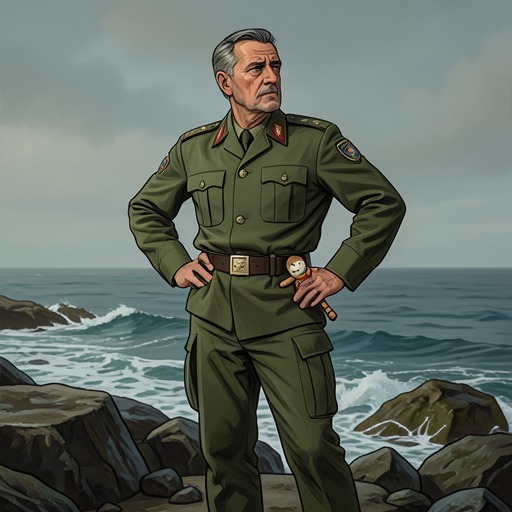
Colonel Stanton’s wounded, feverish state reactivates the wreck story from another direction. While Alice Ruthven visits him, he mutters about a doomed ship and rocks, then speaks of his army experiences. His delirium initially makes the memory uncertain, but his words become more specific when he asks that his wife Laura and his son Jack be saved. The name Laura connects the colonel’s family history with the long-standing belief that Jack’s mother had been named Laura.
Colonel Stanton explains that after the wreck he remained exposed for more than twenty-four hours before people on a passing ship saw him and sent a small boat to rescue him. He remembers being hauled aboard, rejoicing, and then losing consciousness. The exposure affected both his body and his mind. He retained only dim and uncertain memories of a voyage lasting several weeks, a strange hospital where he stayed for two months, and his subsequent transfer to an insane asylum, where a physician treated him brutally and tried to pry into his family affairs.
This history explains why Colonel Stanton could not earlier provide a clear account of Jack’s disappearance. His memory has been damaged by shipwreck, exposure, illness, institutional confinement, and mistreatment. Yet the incomplete recollection aligns with the wreck evidence and with his recognition of Jack. Alice Ruthven and Harry Powell also notice the resemblance between Jack and the wounded colonel, while the colonel’s feverish appeal to save Laura and Jack supplies a verbal link to the family separated by the disaster.
The final confirmation comes after Jack returns home. He is told that Colonel Stanton has proved beyond doubt that Jack is his son. The revelation does more than replace Dr. Mackey’s false paternity claim; it gives a coherent explanation for the wreck, the missing mother, the colonel’s traumatic memory, Laura’s name, and the resemblance between father and son.
Material Evidence and Resolution
The black tin box recovered from the wreck of the Nautilus becomes the mystery’s most consequential physical object. Jack discovers it in a small, filthy closet, where water and dirt have concealed it beneath a solid cake of grime. The box is painted black and secured by a small padlock; Jack opens it with a key from his own bunch. Its hidden position and locked condition make it a literal container for a buried past.
The box is later found in the outlaws’ camp among goods stolen from a trader and other valuables. Its recovery connects the identity mystery to the criminal plot and prevents the family evidence from remaining permanently lost. The box and its contents are turned over to Colonel Stanton, who recognizes the papers as his precious documents. He tells Jack that nothing now stands between them and their fortune, linking the recovery of identity to the restoration of property and inheritance.
The resolution therefore depends on convergence rather than on one isolated clue. Jack’s childhood fragment supports the wreck account; the preserved handkerchief, clothing, and worn ring testify to the unidentified woman; the name Laura appears in Colonel Stanton’s feverish recollection; physical resemblance reinforces the relationship; and the recovered papers provide documentary and financial confirmation. The mystery’s answer is made convincing because these independent lines of evidence meet at Colonel Stanton and Jack.
Meaning of the Identity Mystery
The mystery separates biological parentage from the reality of family without treating either as meaningless. Before Jack learns that Colonel Stanton is his father, Alice Ruthven’s adoption has already given him a home, legal standing, and enduring relationships with the Ruthven family. The final recognition adds birthright and inheritance, but it does not erase the years in which the Ruthvens raised and protected him.
Its repeated reversals also dramatize the difference between identity imposed by speech and identity established through history. The insult that Jack is a nobody, Marion’s account of adoption, Dr. Mackey’s fraudulent claim, and Colonel Stanton’s verified recognition are successive narratives competing to define the same person. The mystery is solved when the most damaging and self-serving account gives way to a version supported by damaged memory, surviving objects, and recovered papers.
By the end, Jack’s past is no longer an empty space or a weapon in another person’s hands. He is simultaneously the rescued child of the Hemlock Bluff wreck, the adopted son of the Ruthvens, and Colonel Stanton’s biological son. The resolution turns a crisis of belonging into a fuller identity: Jack does not merely discover where he came from; he learns that the family that raised him and the family from which he was separated can both belong to the truth of his life.